
Achieving Your 7-Star NatHERS Rating in QLD: The Complete Compliance Roadmap (Plus the Battery Revolution That Changes Everything)
Building a new home in Queensland isn't just about beautiful design and quality finishes anymore
it's about meeting strict energy performance standards that will affect your comfort, your bills, and your home's value for decades to come.
Since May 2024, every new home in Queensland must achieve a minimum 7-star NatHERS rating under the National Construction Code (NCC) 2022. But that's only half the story. Your home also needs to pass a Whole of Home assessment that examines everything from your downlights and power outlets to your air conditioning system, hot water heater, and solar panels.
And here's where things get really exciting: the game has completely changed with the introduction of the federal government's Cheaper Home Batteries Program starting July 1, 2025, combined with innovative free power schemesfrom energy retailers. These developments have transformed home batteries from a luxury to a genuinely smart investment that can dramatically improve your Whole of Home compliance while slashing your running costs.
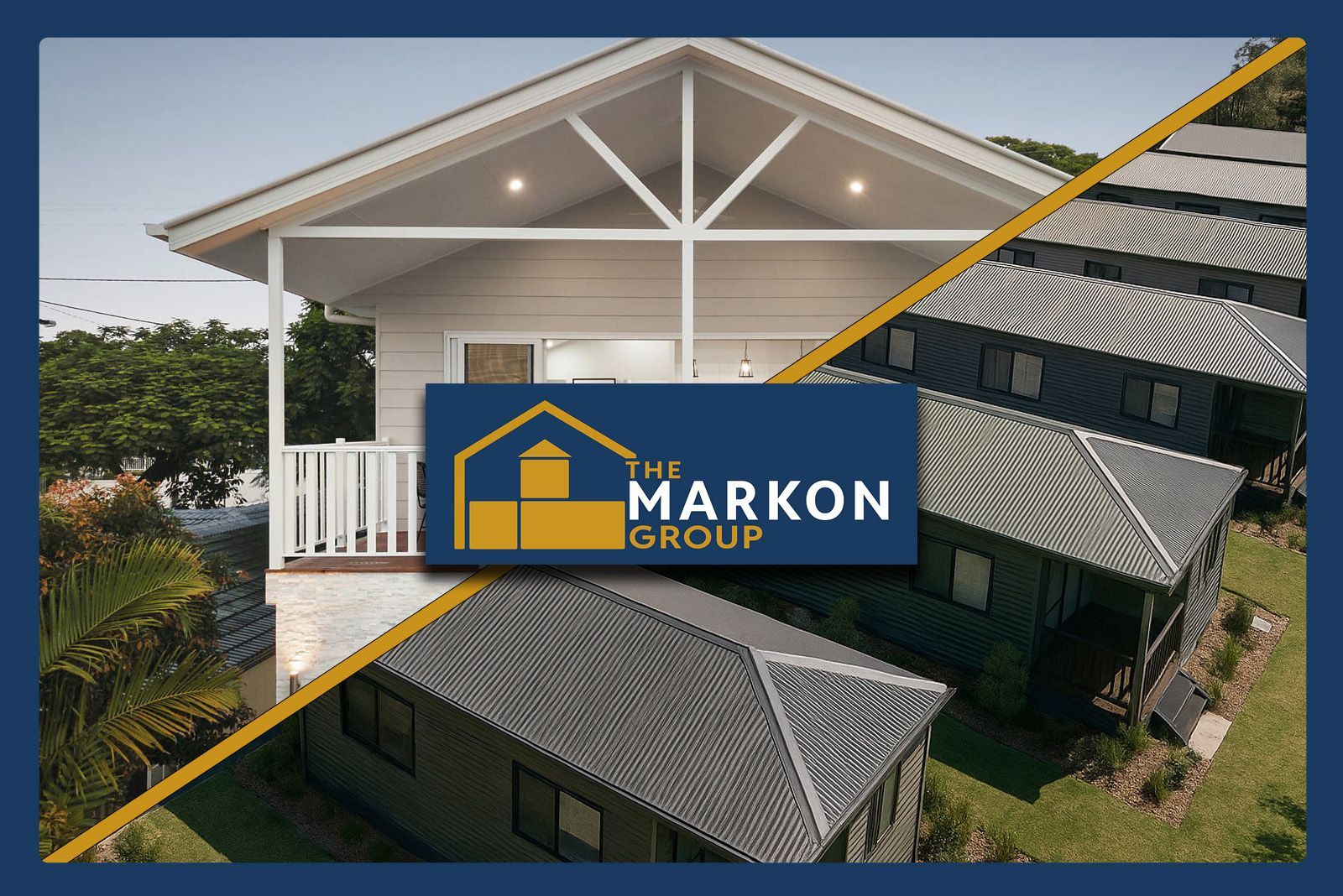
At Homes by Markon and The Markon Group, we're at the forefront of these changes, designing homes that don't just meet the 7-star standard—they exceed it, with integrated solar and battery systems that take advantage of these groundbreaking new programs.
This comprehensive guide breaks down exactly what the 7-star rating means, how the Whole of Home assessment works, and—most importantly—how the new battery rebates and free power schemes have created an unprecedented opportunity for Queensland homeowners.
Understanding the 7-Star NatHERS Rating: What It Actually Measures
NatHERS (Nationwide House Energy Rating Scheme) has been around since 1993, but the jump from 6 stars to 7 stars represents the biggest change to residential energy efficiency in 30 years.
Here's what the rating actually measures:
The Building Thermal Shell
The star rating (out of 10) assesses how well your home's building envelope—the roof, walls, windows, floors, and doors—keeps heat out in summer and warmth in during winter.
According to research from RMIT University, moving from 6 to 7 stars cuts thermal energy use by 20-27%. That translates to real savings: the Queensland government estimates an average of $185 per year in reduced heating and cooling costs.
The assessment uses sophisticated software (like FirstRate5, BERS Pro, or HERO) that models:
- Your home's orientation on the block
- Window sizes, placement, and glazing performance (U-values and Solar Heat Gain Coefficient)
- Insulation levels in ceilings, walls, and floors
- Roof colour and material (this is huge in Queensland)
- Shading from eaves, awnings, and external screens
- Air leakage through gaps and penetrations
- Your specific climate zone within Queensland
For apartments, the whole building must collectively achieve an average of 7 stars, with no individual unit below 6 stars.
Why 7 Stars Matters in Queensland
Queensland's climate zones range from tropical Cairns to the cooler elevated regions around Toowoomba. But across the state, the focus is heavily on managing heat and humidity rather than retaining winter warmth.
A 7-star home in Brisbane or the Gold Coast will:
- Stay significantly cooler during summer without running the air conditioner constantly
- Reduce peak electricity demand (which is when power costs the most)
- Feel more comfortable with fewer "hot spots" near windows
- Require less mechanical cooling, which means lower bills and reduced greenhouse emissions
The Queensland government committed to the 7-star standard specifically because the average Queensland home was already achieving around 6.5 stars—meaning the step up is achievable without massive cost increases, especially with smart design.
The Whole of Home Assessment: Where Appliances Meet the Building Shell
Here's where things get more detailed. The 7-star thermal rating is only Part 1 of compliance. You also need to pass the Whole of Home (WoH) assessment, which was introduced for the first time in NCC 2022.
The Whole of Home assessment looks at the annual energy consumption of your home's major fixed appliances and systems, including:
- Space heating and cooling equipment (air conditioners, ducted systems, heat pumps)
- Hot water systems (gas, electric, solar, heat pump)
- Artificial lighting (downlights, LED fittings, power density)
- Pool and spa pumps (if applicable)
- On-site renewable energy generation (solar PV systems and battery storage)
The assessment generates a Whole of Home score out of 100. To comply:
- Houses and townhouses (Class 1 buildings) need a minimum score of 60
- Apartments (Class 2 buildings) need a minimum score of 50
A score of 100 means your home produces as much energy as it consumes (net-zero energy). Scores above 100 mean you're generating more than you use.
According to the NatHERS Whole of Home overview, this holistic approach ensures homes don't just have good insulation but also use efficient appliances and, where possible, renewable energy to offset consumption.
Artificial Lighting Requirements: The 4 W/m² Rule and Downlight Limits
One of the most misunderstood aspects of the new code is the artificial lighting power density requirement.
What the Code Actually Says
For Class 1 buildings (houses and townhouses), the NCC 2022 specifies that artificial lighting must have a maximum power density of 4 W/m² serving all internal spaces.
This doesn't mean you're limited in the number of downlights or light fittings—it means the total wattage of your lighting, divided by the floor area, cannot exceed 4 watts per square metre.
Calculating Your Lighting Budget
Let's say you're building a 200m² home:
- Maximum total lighting wattage = 200m² × 4 W/m² = 800 watts
If you're using modern LED downlights at 10 watts each, you could install up to 80 downlights across the entire home and still comply.
However, if you're using older-style halogen downlights at 50 watts each, you'd be limited to just 16 downlights for the whole house—which is nowhere near enough.
Why LED is Non-Negotiable
The shift to LED lighting isn't just about energy efficiency—it's about making the numbers work. According to the NCC, the 4 W/m² requirement effectively mandates LED technology for new homes.
At Homes by Markon, we specify:
- LED downlights (typically 7-12 watts each depending on the room and ceiling height)
- Dimmable options where appropriate (dimming can further reduce the Whole of Home energy score)
- IC-rated (Insulation Contact) downlights wherever possible, which allow continuous ceiling insulation without gaps—this is critical for maintaining your thermal performance
The Downlight Penetration Problem
Here's something many builders miss: every downlight creates a penetration in your ceiling insulation. If you're using non-IC-rated downlights, you need to leave gaps around them to prevent fire risk, which creates thermal weak spots.
The ABCB specifically recommends removing downlights that aren't IC4-rated and replacing them with other lighting options that allow continuous ceiling insulation. This can make a measurable difference to your star rating.
What About Power Outlets?
There's a common misconception that the NCC limits the number of power outlets (GPOs—general power outlets) you can install. This is not true.
The NCC's lighting requirements specifically exclude "lamps plugged into general purpose socket outlets" because portable appliances are too difficult to regulate. You can install as many power outlets as you need—the Whole of Home assessment focuses on fixed appliances and lighting, not what you might plug in later.
Heating and Cooling: How Your Air Conditioning System Affects Compliance
Your choice of heating and cooling system has a massive impact on your Whole of Home score.
Star Ratings for Air Conditioners
Air conditioners in Australia are rated under the Greenhouse and Energy Minimum Standards (GEMS). The rating system was updated in 2019 and now varies by climate zone.
For Queensland (generally warm to hot climates), you'll see ratings for:
- Cooling performance (most important in QLD)
- Heating performance (less critical but still assessed)
The ratings typically range from 1 to 6 stars (sometimes higher for premium units). The more stars, the more efficient the unit.
Ducted vs Split Systems
Ducted air conditioning systems are popular in Queensland for whole-home cooling, but they come with specific considerations:
- Three-phase power: Larger ducted systems (typically above 12-14kW) may require three-phase power. This doesn't affect your NatHERS rating directly, but it's a design consideration that needs to be planned early.
- Zoning: Modern ducted systems with zoning controls (allowing you to cool only occupied rooms) perform better in the Whole of Home assessment because they reduce unnecessary energy use.
- Star rating: A ducted system's GEMS rating is critical. The Whole of Home "reference building" assumes a 3-star ducted heat pump. If your system is rated lower, you'll need to compensate elsewhere (better insulation, solar panels, or a more efficient hot water system).
Split systems (wall-mounted or ceiling cassette units) are often more efficient than ducted systems, especially if you're only cooling specific rooms. High-efficiency split systems can achieve 5-6 stars under GEMS, which significantly helps your Whole of Home score.
Heat Pumps vs Refrigerated Cooling
The NCC 2022 has a strong preference for heat pump technology (reverse-cycle air conditioners) over cooling-only units or gas heating. Heat pumps are far more energy-efficient because they move heat rather than generate it.
At The Markon Group, we typically specify:
- High-efficiency reverse-cycle split systems for smaller homes or specific zones
- Ducted reverse-cycle systems with zoning for larger homes
- Minimum 3.5-star GEMS rating for ducted systems (higher where budget allows)
Hot Water Systems: The Hidden Energy Hog
After heating and cooling, hot water is typically the second-largest energy user in a Queensland home.
How Hot Water Affects Your Whole of Home Score
The Whole of Home "reference building" assumes a 5-star instantaneous gas water heater. If you choose a less efficient system, you'll struggle to hit the required score of 60.
Here's how different systems compare:
Gas Systems:
- Instantaneous gas (5-star): Meets the reference standard
- Gas storage tank: Less efficient, harder to comply
- Solar-assisted gas: Better than standard gas, uses solar pre-heating
Electric Systems:
- Standard electric storage: Very poor efficiency, will likely fail Whole of Home
- Heat pump hot water: Excellent efficiency (equivalent to 3-4 times more efficient than standard electric)
- Solar electric hot water: Excellent, especially with good solar access
The Shift Away from Gas
There's a clear policy direction in the NCC 2022 toward electrification. Gas appliances "chew up" a lot of your energy budget because:
- Gas has higher greenhouse emissions per unit of energy
- Gas infrastructure has supply charges even if you use minimal gas
- Electric systems can be offset by rooftop solar (gas cannot)
At Homes by Markon, we're increasingly recommending:
- Heat pump hot water systems as the default choice
- Solar electric hot water where roof orientation and budget allow
- Avoiding gas altogether in new builds, which simplifies the Whole of Home compliance and future-proofs the home
STCs and Hot Water
Heat pump and solar hot water systems are eligible for Small-scale Technology Certificates (STCs) under Australia's Renewable Energy Target. The number of STCs is required as an input in the NatHERS Whole of Home assessment and can be found on the Clean Energy Regulator's website.
The Battery Revolution: How the 2025 Federal Rebate Changes Everything
Here's where the story gets genuinely exciting. If you're building a new home in Queensland right now, you're in the perfect position to take advantage of what might be the biggest opportunity in residential energy in Australian history.
The Cheaper Home Batteries Program: Up to $18,600 Off
Starting July 1, 2025, the Australian Government's Cheaper Home Batteries Program provides a rebate of approximately $372 per kilowatt-hour (kWh) of usable battery capacity.
Here's what that means in real terms:
- 10kWh battery: ~$3,700 rebate
- 13.5kWh battery (Tesla Powerwall 3): ~$5,000 rebate
- 20kWh battery: ~$7,400 rebate
- 30kWh battery: ~$11,160 rebate
- 50kWh battery (maximum eligible): ~$18,600 rebate
This is a $2.3 billion federal initiative designed to support over one million new battery installations by 2030. The rebate is applied as an upfront point-of-sale discount—you don't need to apply separately, your installer handles it automatically.
Key Eligibility Requirements
To qualify for the rebate:
- Battery must be between 5kWh and 100kWh nominal capacity
- Rebate applies to the first 50kWh of usable capacity
- Must be paired with new or existing rooftop solar
- Battery and inverter must be Clean Energy Council (CEC) approved
- Must be installed by a Solar Accreditation Australia (SAA) accredited installer (like The Markon Group's partners)
- Battery must be VPP-capable (but you don't have to join a Virtual Power Plant)
- Both on-grid and off-grid systems are eligible
The Rebate is Declining—Act Now
The rebate amount decreases each year until the program ends in 2030:
Year202520262027202820292030Rebate per kWh$372$336$296$260$224$188
This means 2025 is the best year to install a battery—you'll get the maximum rebate. By 2030, the rebate will be less than half what it is now.
Why This Changes Whole of Home Compliance
Remember that Whole of Home score of 60 you need to achieve? A properly sized solar and battery system can make compliance dramatically easier and cheaper overall.
Here's a real example from energy compliance modeling:
Scenario 1: No Solar, Minimal Battery
- 150m² house in Brisbane
- 3.5-star ducted heat pump
- Instantaneous gas water heater
- 1.2kW solar PV system
- Result: Achieves Whole of Home compliance (score of 60)
Scenario 2: Better Appliances, No Solar
- 150m² house in Brisbane
- 5.5-star non-ducted heat pump
- Heat pump water heater
- No solar required
- Result: Still achieves compliance
Scenario 3: Solar + Battery (The Markon Approach)
- 150m² house in Brisbane
- 3.5-star ducted heat pump (standard efficiency)
- Heat pump water heater
- 6.6kW solar PV system
- 30kWh battery (with $11,160 rebate)
- Result: Exceeds compliance (score of 75+), near-zero electricity bills
The third scenario is now genuinely affordable thanks to the federal rebate, and it delivers:
- Easier NatHERS compliance (you can use standard-efficiency appliances)
- Lower construction costs (don't need premium-rated air conditioning)
- Dramatically lower running costs (potentially 80-90% reduction in electricity bills)
- Blackout protection (critical in Queensland's storm season)
- Future-proofed for rising electricity prices
Free Power Schemes: The Game-Changer for Battery Owners
Now here's where it gets even better. Several energy retailers in Australia are now offering free electricity for 3 hours in the middle of the day, typically from 11am to 2pm.
This isn't a gimmick—it's a response to the massive amount of solar power flooding the grid during peak sunshine hours, which often drives wholesale electricity prices to zero or even negative.
How Free Power Works
The Australian Government is introducing the Solar Sharer Offer, which will require electricity retailers to offer plans with at least 3 hours of free electricity daily starting July 2026 in Queensland, NSW, and South Australia.
But you don't have to wait—several retailers already offer these plans:
- AGL: "Three for Free" plan (11am-2pm free)
- OVO Energy: "Free 3" plan (11am-2pm free)
- Red Energy: "Red EV Saver" (free hours for EV charging)
- GloBird Energy: "ZeroHero" plan
Why This is Perfect for Battery Owners
If you have a 30kWh battery and a free power plan, here's what happens:
On a sunny day:
- Your solar panels charge the battery for free
- Excess solar exports to the grid (you get paid feed-in tariff)
- Battery powers your home from sunset to sunrise
On a cloudy or rainy day:
- Your solar panels produce less power
- From 11am-2pm, the grid charges your battery for FREE
- You can import up to 10kW per hour (30kWh over 3 hours on single-phase)
- Battery still powers your home through the evening and night
- You pay nothing for electricity
This is revolutionary. It means your battery system works even when the sun doesn't shine. You're no longer dependent on perfect weather—the grid becomes your backup solar system, charging your battery for free during the middle of the day.
Real-World Example
One battery owner on the SolarQuotes forum reported:
"I have a 40kWh battery and 13.2kW solar, plus two EVs. The 3 hours free in the middle of the day was excellent during winter (low solar production) and on many poor solar days to ensure my home battery was at 100% by 2PM every day. We also often top up charge one of our EVs during that window too if it's at home. The practical result is that our battery gets us through the night till 11AM the next day every day so far, so we never use any peak or shoulder electricity and thus never get charged for electricity use."
Zero electricity charges. That's the goal, and it's now genuinely achievable.
Sizing Your Battery for Free Power
With free power available 3 hours a day, the optimal battery size for a Queensland home is typically:
- Small home (100-150m²): 20-25kWh battery
- Medium home (150-200m²): 25-30kWh battery
- Large home (200-300m²): 30-40kWh battery
A 30kWh battery is the sweet spot for most families because:
- It can fully charge during the 3-hour free window (10kW × 3 hours = 30kWh)
- It provides enough storage for overnight use plus morning consumption
- With the federal rebate (~$11,160), the net cost is around $8,000-$10,000
- Combined with a 6.6kW solar system, you can achieve near-zero electricity bills year-round
Solar PV Systems: The Foundation of Your Energy Independence
While batteries get a lot of attention, your solar PV system is still the foundation of energy independence.
Optimal Solar System Size for Queensland
For a new home in Queensland, we typically recommend:
- Small home (100-150m²): 5-6.6kW solar system
- Medium home (150-200m²): 6.6-8kW solar system
- Large home (200-300m²): 8-10kW solar system
- Home with pool: Add 2-3kW to the above
A 6.6kW system is the most popular size because:
- It's the maximum size for single-phase connection without special approval
- It generates approximately 25-30kWh per day in Brisbane/SEQ
- It's large enough to power the home, charge a battery, and export excess
- Combined with a 30kWh battery, it provides genuine energy independence
Solar System Design Considerations
A good solar system for a Queensland home should:
- Face north where possible (or split between north and west for afternoon generation)
- Be sized appropriately for the home's consumption and battery capacity
- Use quality panels and inverters (cheap systems underperform and fail sooner)
- Be integrated with the home's roof design—a white Colorbond roof with good solar access is ideal
- Account for future battery addition in the electrical design (even if not installing battery immediately)
Solar + Battery Economics
Here's the math that makes solar and batteries compelling:
Upfront Costs (2025):
- 6.6kW solar system: ~$5,500 (after STC rebate)
- 30kWh battery: ~$20,000
- Federal battery rebate: -$11,160
- Net cost: ~$14,340 (Depending on system, battery manufacturer and brand - See The Markon Group for custom designed systems)
Annual Savings:
- Typical Queensland household electricity bill: ~$2,000-$2,500/year
- With solar + battery + free power plan: ~$200-$400/year (just supply charges)
- Annual saving: ~$2,000-$2,200
Payback Period:
- $14,340 ÷ $2,100 = 6.8 years
After 7 years, you're essentially getting free electricity for the life of the system (25+ years for solar, 15 - 20 years for battery).
And that's before considering:
- Rising electricity prices (historically 3-5% per year)
- Blackout protection (priceless during storms)
- Increased home value (solar homes sell for 3-5% more)
- Environmental benefits (reducing your carbon footprint by 4-6 tonnes CO₂ per year)
Insulation and Glazing: The Foundation of Your 7-Star Rating
While appliances, solar, and batteries are important for Whole of Home, you can't achieve a 7-star thermal rating without excellent insulation and glazing.
Ceiling Insulation in Queensland
Your roof and ceiling are the biggest thermal challenge in Queensland. On a summer day, a dark roof can reach 70-80°C, and without good insulation, that heat radiates straight into your living spaces.
Minimum requirements for Brisbane/SEQ (Climate Zone 2):
- Ceiling insulation: R4.0 (for roofs with low solar absorptance)
- Higher R-values required for darker roofs
What we actually recommend:
- R4.5 to R5.0 ceiling insulation as standard
- White Colorbond roof to reflect solar radiation (this is a Markon standard where applicable)
- Reflective foil under the roof combined with bulk insulation (batts)
- IC-rated downlights to maintain continuous insulation
The combination of a white Colorbond roof and high R-value ceiling insulation can reduce your cooling load by 20-30%compared to a dark roof with minimum insulation.
Wall Insulation
Wall insulation is often overlooked in Queensland, but it matters—especially on west and east-facing walls that cop direct sun.
Typical specifications:
- R2.0 to R2.7 wall insulation for Brisbane/SEQ
- Higher R-values for lightweight construction (timber frame with cladding)
- Reflective wraps or foil to reduce radiant heat transfer
Glazing: Windows and Doors
Windows are the weakest point in your thermal envelope. Glass conducts heat far more readily than insulated walls.
Key glazing metrics:
- U-value: How easily heat flows through the glass (lower is better)
- SHGC (Solar Heat Gain Coefficient): How much solar heat the glass lets through (lower is better for hot climates)
Single vs Double Glazing:
In Queensland, double glazing isn't always mandatory, but it's increasingly common for:
- Large sliding or stacking doors (especially west-facing)
- Bedrooms exposed to morning or afternoon sun
- Noise reduction in busy areas (Gold Coast, Brisbane suburbs near main roads)
Selective double glazing—upgrading only the most problematic windows—is often more cost-effective than double-glazing the entire home.
Low-E (low-emissivity) glass is another option. It has a special coating that reflects heat while still allowing light through. It's cheaper than full double glazing and can be very effective on north, west, and east-facing windows.
Pools and Spas: The Compliance Requirement Everyone Forgets
If your home includes a swimming pool or spa, there are two separate compliance issues:
Pool Pumps in the Whole of Home Assessment
If you have a pool or spa, the pump energy consumption is included in your Whole of Home assessment.
What's assessed:
- Pump size and efficiency
- Operating hours per day
- Whether you have a variable-speed pump (much more efficient)
- Solar heating for the pool (if installed)
How to minimize the impact:
- Specify a variable-speed pump (can reduce energy use by 50-70%)
- Use a timer to run the pump during off-peak hours or when solar is generating
- Consider solar pool heating instead of gas or electric (solar thermal panels on the roof)
- Run the pump during free power hours (11am-2pm) if you're on a free power plan
At The Markon Group, we always include pool pumps in the early Whole of Home modeling so there are no surprises at the end of the project.
How The Markon Group Achieves 7-Star Compliance (And Exceeds It)
At Homes by Markon and The Markon Group, we've developed a systematic approach to achieving 7-star NatHERS and Whole of Home compliance that balances performance, cost, and livability—while taking full advantage of the new battery rebates and free power schemes.
Step 1: Early NatHERS Modeling
We engage a NatHERS accredited assessor during the concept design phase—not at the end when it's too late to make changes.
Early modeling allows us to:
- Test different roof colors, insulation levels, and window configurations
- Identify which upgrades give the best "bang for buck"
- Avoid expensive mistakes (like oversized west-facing windows with no shading)
- Show clients the cost vs performance trade-offs for different options
Step 2: Climate-Responsive Design
Every Markon home is designed for its specific Queensland climate zone:
- Orientation: Living areas face north or north-east where possible
- Shading: Generous eaves, external blinds, or louvres on west and east elevations
- Cross-ventilation: Operable windows positioned to catch prevailing breezes
- Ceiling fans: Included in all major rooms (they're cheap, effective, and improve the NatHERS rating)
Step 3: Smart Specification Choices
We use a tiered approach to specifications:
Essential (every home):
- White Colorbond roof (where applicable)
- R4.5+ ceiling insulation
- R2.5+ wall insulation
- IC-rated LED downlights (4 W/m² compliance)
- High-efficiency reverse-cycle air conditioning (minimum 3.5-star GEMS)
- Heat pump or solar hot water
Performance upgrades (where budget allows):
- Selective double glazing on large doors and west-facing windows
- Low-E glass on priority elevations
- 6.6kW solar PV system
- Variable-speed pool pump (if pool included)
Premium (high-performance homes):
- Full double glazing with thermally broken frames
- R5.0+ ceiling insulation
- Higher-spec air conditioning (5+ star GEMS)
- 6.6kW solar + 30kWh battery (with $11,160 federal rebate)
- Advanced air-tightness detailing
Step 4: Integrated Solar + Battery Strategy
This is where The Markon Group really differentiates itself. We don't just add solar and batteries as an afterthought—we design the entire home around energy independence.
Our standard recommendation for new builds in 2025:
The Markon Energy Independence Package:
- 6.6kW solar PV system (north-facing where possible)
- 30kWh battery system (with $11,160 federal rebate)
- Free power electricity plan (3 hours free daily)
- Heat pump hot water (electric, solar-compatible)
- All-electric home (no gas connection)
- Smart home energy management (monitoring and optimization)
What this delivers:
- Whole of Home score of 70-80 (well above the required 60)
- Near-zero electricity bills (potentially $200-$400/year total)
- Blackout protection (critical for Queensland storms)
- Future-proofed for rising electricity prices and potential gas phase-out
- Premium home value (energy-independent homes command higher prices)
Step 5: Documentation and Certification
We provide:
- NatHERS Certificate showing the star rating
- Whole of Home report with the score and energy breakdown
- Detailed specifications for the builder (insulation, glazing, appliances, lighting)
- Solar and battery system design with federal rebate documentation
- As-built verification to ensure what's installed matches what was modeled
Common Mistakes That Cause Homes to Fail Compliance
Even experienced builders can trip up on the new NCC 2022 requirements. Here are the most common mistakes we see:
1. Leaving NatHERS Assessment Until the End
If you wait until the design is finalized, you've lost the opportunity to make cost-effective changes. Fixing a failed assessment at the end often means expensive retrofits. At The Markon Group we are onto this from the very start.
2. Ignoring Roof Color
A dark roof in Brisbane can add 0.5 to 1.0 stars to the insulation and glazing requirements. A white Colorbond roof is one of the cheapest ways to improve performance and is standard on all our builds
3. Oversized West-Facing Windows Without Shading
Large west-facing glass is a NatHERS killer. If you must have it, you need external shading (not internal blinds) and high-performance glazing.
4. Using Non-IC-Rated Downlights
Gaps around downlights create thermal weak spots. Always specify IC4-rated LED downlights.
5. Choosing Cheap, Low-Efficiency Appliances
A 2-star air conditioner or standard electric hot water system will blow your Whole of Home budget. You'll end up needing a bigger solar system to compensate, which costs more overall.
6. Not Accounting for Pool Pumps
Forgetting to include the pool pump in the Whole of Home assessment is a common oversight that can cause a late-stage failure.
7. Undersizing the Battery System
With the federal rebate making larger batteries affordable, don't make the mistake of installing a 10kWh battery when a 30kWh system would deliver dramatically better results for only a few thousand dollars more (after rebate).
8. Not Planning for Free Power
If you're installing a battery, make sure your electrical design allows for maximum charging rate during the 3-hour free power window. This means proper circuit sizing and potentially three-phase connection for larger batteries.
The Future: Where Energy Efficiency is Heading
The 7-star standard is just the beginning. The NCC is reviewed every three years, and the trajectory is clear:
- 8-star minimum is likely within the next 5-10 years
- All-electric homes will become the norm as gas is phased out
- Battery storage will become standard in new builds (not optional)
- Smart home energy management systems will be integrated into compliance pathways
- Vehicle-to-Home (V2H) technology will allow EVs to power homes during outages
- Community batteries and Virtual Power Plants will become more common
At The Markon Group, we're already designing homes that exceed the current minimums, because:
- Future-proofing protects resale value
- Lower running costs are a major selling point
- Comfort is what clients actually experience every day
- Energy independence is increasingly valuable as grid electricity becomes more expensive and less reliable
The Bottom Line: Now is the Perfect Time to Build
If you're planning to build a new home in Queensland in 2025, you're in an unprecedented position:
The 7-star NatHERS requirement ensures your home will be comfortable and efficient.
The Whole of Home assessment ensures you'll have efficient appliances and systems.
The federal battery rebate (up to $18,600) makes battery storage genuinely affordable.
Free power schemes mean your battery works even on cloudy days.
The combination of all these factors means you can build a home that:
- Meets all compliance requirements easily
- Costs less to run than any home built before
- Provides blackout protection during storms
- Is future-proofed for rising electricity prices
- Commands a premium resale value
This opportunity won't last forever. The battery rebate decreases each year, and by 2030 it will be less than half what it is now. Free power schemes could change or become less generous as more people take them up.
Ready to Build a Home That Exceeds the Standard?
Achieving 7-star NatHERS and Whole of Home compliance isn't about cutting corners or just scraping through—it's about designing a home that genuinely performs better in Queensland's climate while taking full advantage of the unprecedented incentives available right now.
At Homes by Markon, we combine:
- Early-stage NatHERS modeling to optimize your design
- Climate-responsive architecture that works with Queensland's sun, breezes, and humidity
- Smart specification choices that balance performance and budget
- Integrated solar + battery systems with full federal rebate support
- Free power plan optimization to minimize running costs
- Quality construction that delivers what the models promise
When you build a custom home with The Markon Group we'll guide you through every step of the compliance process—and deliver a home that doesn't just meet the 7-star standard, it exceeds it.
The battery revolution is here. The free power schemes are launching. The federal rebates are at their peak.
Get in touch with Homes by Markon today to discuss your project. Let's design a home that achieves genuine energy independence—with near-zero electricity bills, blackout protection, and a level of comfort and performance that was simply impossible just a few years ago.