
Three-Storey Homes: Structure, Stairs, Lifts, and Privacy
Go up with comfort, safety, and amazing views.
There's something undeniably exciting about a three-storey home. The promise of separation, space, and stunning views from that top-floor retreat. The ability to house multiple generations under one roof while still giving everyone room to breathe. The clever use of a compact block to create a home that feels expansive and generous.
But let's be honest—building up instead of out comes with its own set of considerations. Structural requirements change. Stairs become a central design element (and a potential accessibility challenge). Acoustic separation between floors suddenly matters a great deal. And the way you zone each level can make the difference between a home that flows beautifully and one that feels disjointed.
At The Markon Group, we're seeing a genuine shift in how Queensland families are thinking about home design. More and more, we're being asked to design and build three-storey homes that accommodate multiple generations, pool family resources, and create flexible living arrangements that adapt to changing circumstances over time.
This isn't just a trend—it's a practical response to the realities of modern life, housing affordability, and a return to the kind of multi-generational living that has been the norm in many parts of the world for centuries.
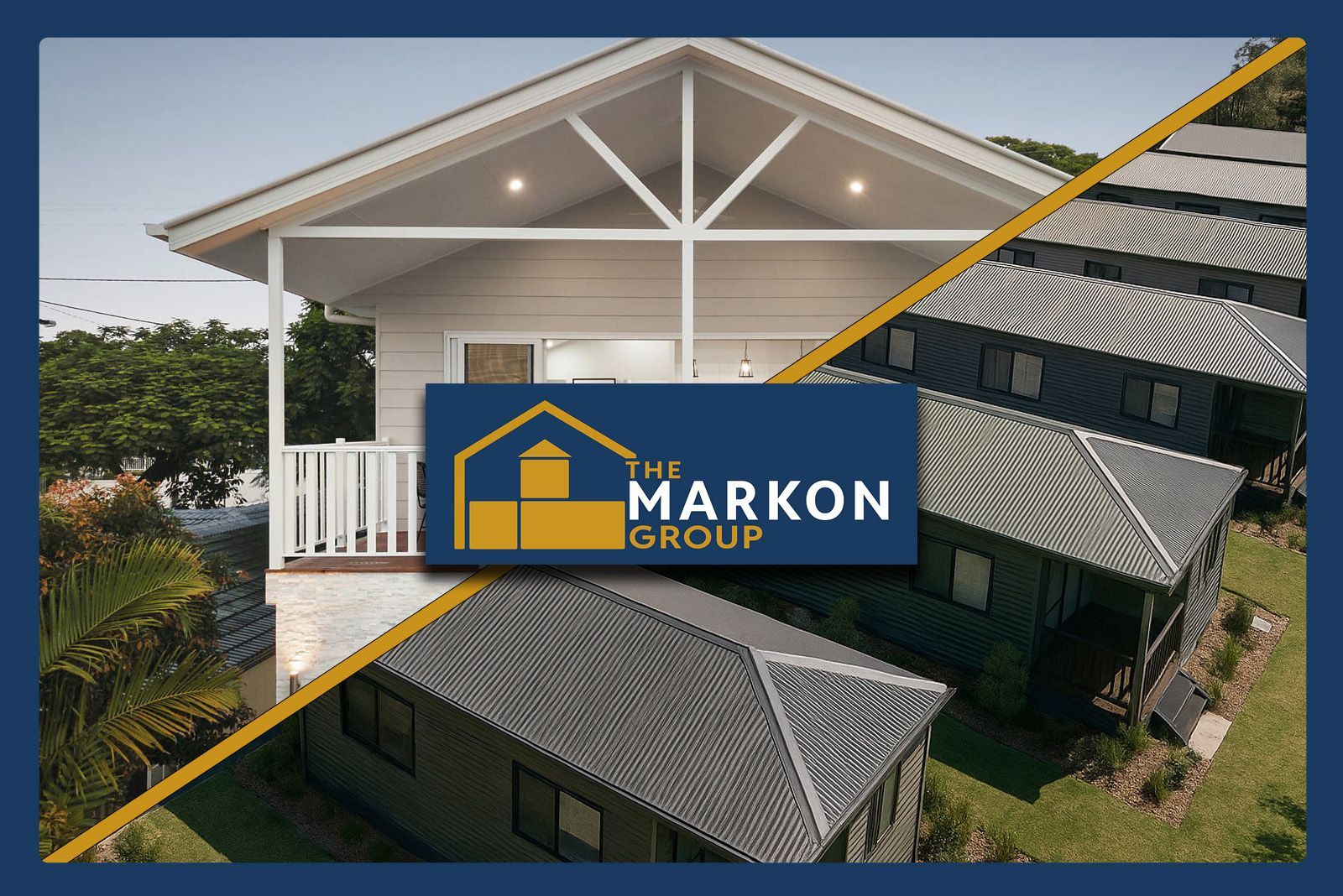
Right now, we're putting these principles into practice with our beautiful three-storey homes currently under construction at The Oasis in Keperra. These homes represent everything we believe about vertical living done right—thoughtful design, quality construction, and spaces that genuinely work for modern Queensland families. They're a perfect example of how building up can deliver exceptional outcomes without compromising on liveability or style.
In this guide, we'll walk you through everything you need to consider when planning a three-storey home in Queensland. From structural and engineering requirements to stair and lift planning, acoustic separation, floor zoning strategies, and the exciting possibilities that come with building vertically, we'll give you the knowledge you need to approach your build with confidence.
Why Three-Storey Homes Are Gaining Momentum in Queensland
Let's start with the obvious question: why are more families choosing to build up?
The answer is multi-layered, much like the homes themselves.
Land values and block sizes are changing. Across South-East Queensland—from Brisbane's inner suburbs to the Gold Coast and out to growth corridors like Logan and Ipswich—land is becoming more expensive and blocks are getting smaller. Where once a generous 600-square-metre block was standard, many new estates now offer lots of 400 square metres or less. Infill developments in established suburbs often involve even tighter constraints.
When your footprint is limited, the only way to gain space is to go up. A well-designed three-storey home can deliver the same (or greater) living area as a sprawling single-storey home, but on a fraction of the land.
Families are rethinking how they live together. The nuclear family model—mum, dad, and the kids in their own standalone home—is no longer the only way Australians are choosing to live. We're seeing a significant increase in multi-generational households, where adult children remain at home longer, ageing parents move in with their children, or extended family members pool resources to purchase property together.
This isn't a step backwards. In many ways, it's a return to a model of living that has served families well for generations across Europe, Asia, and many other parts of the world. The idea that every adult needs their own separate dwelling is a relatively recent (and arguably unsustainable) expectation.
The housing crisis is real, and families are responding creatively. Let's not dance around it—Australia is in the grip of a genuine housing affordability crisis. Property prices have outpaced wage growth for decades. Rental vacancy rates are at historic lows. Young people are finding it increasingly difficult to enter the property market, and older Australians are worried about housing security in retirement.
In this environment, pooling family resources makes sense. Parents and adult children are combining assets to purchase land and build homes that accommodate everyone. Grandparents are contributing to builds that include a self-contained space for them, allowing them to age in place surrounded by family while freeing up housing stock elsewhere.
A three-storey home designed for multi-generational living isn't just a lifestyle choice—it's a practical, financially savvy response to the challenges of our time.
Our Oasis Keperra builds demonstrate this perfectly. The three-storey homes we're currently constructing at The Oasis in Keperra showcase exactly how vertical living can solve modern housing challenges. These homes maximise their sites while delivering the space, separation, and flexibility that growing and multi-generational families need. They're proof that you don't need a sprawling estate block to create a home that feels generous, private, and perfectly suited to how families actually live.
The Structural Realities of Building Three Storeys
Before we get into the exciting design possibilities, let's talk about what's actually involved in building a three-storey home from a structural and engineering perspective.
Building up adds complexity. There's no getting around that. But with the right builder and engineering team, these challenges are entirely manageable—and the results are absolutely worth it.
Structural engineering requirements increase significantly. A three-storey home needs to support considerably more load than a single or double-storey dwelling. The structural frame—whether steel or timber—needs to be engineered to handle the cumulative weight of multiple floors, plus all the live loads (people, furniture, fixtures) on each level.
At The Markon Group, we predominantly use BlueScope TRUECORE® steel framing for our multi-storey builds. Steel offers exceptional strength-to-weight ratio, meaning we can achieve the structural performance required without excessive bulk. It's also dimensionally stable (it won't warp, twist, or shrink like timber can), termite-proof, and non-combustible—all important considerations for a home that will serve your family for decades.
Foundation requirements are more substantial. The footings and slab for a three-storey home need to be designed to transfer significantly greater loads to the ground. Depending on your site's soil conditions, this might mean deeper footings, more extensive reinforcement, or engineered slab systems.
This is where a thorough site assessment and geotechnical investigation become essential. Understanding your soil type, bearing capacity, and any reactive soil conditions allows the engineering team to design foundations that will perform reliably over the life of the building.
Wind loads and bracing become critical considerations. Queensland is no stranger to severe weather, and a taller building presents more surface area to wind forces. The structural bracing system—the elements that prevent the building from racking or swaying under wind load—needs to be carefully designed and integrated into the frame.
This is particularly important in coastal areas like the Gold Coast, where wind ratings are higher, and in elevated positions where buildings are more exposed.
Service cores and load paths need careful planning. In a three-storey home, you'll have services (plumbing, electrical, data, HVAC) running vertically through the building. Planning these service cores early in the design process ensures they're located efficiently, minimises the need for horizontal runs through floor structures, and makes future maintenance and upgrades easier.
Similarly, the structural load paths—the way forces travel from the roof down through the walls and into the foundations—need to be considered holistically. Ideally, load-bearing walls and columns should stack vertically through the building, creating clear, efficient load paths.
Zoning Your Three Storeys: Creating Functional Separation
One of the greatest advantages of a three-storey home is the ability to create genuine separation between different functions and different household members. But this only works if you zone each level thoughtfully.
There's no single "right" way to arrange a three-storey home—the best layout depends on your family's specific needs, your block's orientation and slope, and how you want to live day-to-day. That said, here are some common approaches we see working well for Queensland families.
Ground floor as the social and service hub. Many three-storey designs place the main living areas—kitchen, dining, family room—on the ground floor, with direct connection to outdoor living spaces and the backyard. This makes sense for families with young children, for those who entertain frequently, or where accessibility is a priority.
The ground floor might also include a garage, laundry, and potentially a guest bedroom or home office. For multi-generational households, this level could incorporate a self-contained suite for grandparents, complete with bedroom, bathroom, and kitchenette, allowing them to live independently while remaining connected to the family.
First floor as the private retreat. The middle level often becomes the primary bedroom zone—master suite, children's bedrooms, family bathroom, and perhaps a secondary living area or retreat. This creates a buffer between the active ground floor and whatever sits above.
Placing bedrooms on the first floor also means they benefit from being elevated above street level, which can improve privacy and reduce noise intrusion from outside.
Top floor as the premium space. The third storey is where things get really interesting. Elevated above the surrounding neighbourhood, this level often captures the best views, the most natural light, and a genuine sense of separation from the activity below.
Some families use the top floor as a luxurious master suite—a true parents' retreat with ensuite, walk-in robe, and private balcony. Others create a dedicated living space here: a home theatre, games room, or teenager's retreat. For multi-generational households, the top floor might become a self-contained apartment for adult children, complete with its own kitchen, bathroom, and living area.
The possibilities are genuinely limited only by your imagination and your budget.
How we're zoning the Oasis Keperra homes. Our three-storey builds at The Oasis in Keperra demonstrate smart vertical zoning in action. These homes have been designed to maximise the benefits of each level—taking advantage of the site, the orientation, and the lifestyle needs of the families who'll call them home. The result is homes where every floor has purpose, every space earns its place, and the overall flow feels natural and intuitive.
Alternative approaches for sloping sites. If your block has significant slope, you might flip the traditional arrangement entirely. On a site that falls away from the street, it often makes sense to enter at the top level, with living spaces stepping down the slope and bedrooms on the lower levels. This can create dramatic living spaces with soaring ceilings and expansive views, while bedrooms benefit from being tucked into the hillside for natural cooling and acoustic isolation.
Multi-Generational Living: Bringing Back What Works
Let's spend some time on this, because it's one of the most significant shifts we're seeing in how families approach home building.
The idea of multiple generations living under one roof isn't new—it's actually the historical norm. For most of human history, and still today in much of Europe, Asia, the Middle East, and Latin America, extended families have lived together as a matter of course. Grandparents helped raise grandchildren. Adult children cared for ageing parents. Resources were pooled, knowledge was shared, and family bonds were strengthened through daily proximity.
The Australian expectation that every adult should establish their own separate household is a relatively recent phenomenon, driven largely by post-war prosperity, suburban expansion, and cultural shifts toward individualism. And while there's nothing wrong with wanting your own space, the reality is that this model is becoming increasingly difficult to sustain.
The financial logic is compelling. When parents and adult children pool resources to purchase land and build a multi-generational home, everyone benefits. The combined purchasing power allows access to better locations, larger blocks, or higher-quality construction than any party could afford alone. Ongoing costs—rates, insurance, utilities, maintenance—are shared. And the family builds equity in a single, valuable asset rather than spreading resources thin across multiple properties.
For young people struggling to enter the property market, this can be the difference between homeownership and indefinite renting. For older Australians, it can provide housing security and the ability to age in place surrounded by family, rather than facing the prospect of aged care facilities.
The lifestyle benefits are equally significant. Grandparents who live with or near their grandchildren often report higher levels of happiness and purpose. Children who grow up with grandparents in the home develop stronger intergenerational bonds and benefit from the wisdom and attention of older family members. Parents gain trusted support with childcare and household management.
For ageing parents, remaining in a family home (rather than moving to a retirement village or aged care) can support better health outcomes, greater independence, and a higher quality of life. They maintain their dignity and autonomy while having family nearby if needed.
A response to Australia's housing crisis. The housing crisis isn't just about affordability—it's about availability. There simply aren't enough homes to go around, and the homes that exist aren't always configured for how people actually want to live.
Multi-generational living addresses both problems. By housing more people under one roof, it reduces overall demand for separate dwellings. And by designing homes specifically for extended family living, it creates housing that actually matches modern needs rather than forcing families into configurations that don't work.
When a grandparent moves into a purpose-built suite in their children's three-storey home, they free up a house or unit elsewhere in the market. When adult children remain in a well-designed family home rather than competing for scarce rentals, pressure on the rental market eases. These individual decisions, multiplied across thousands of families, can make a meaningful difference to housing availability.
Designing for successful multi-generational living. The key to making multi-generational living work is thoughtful design that balances togetherness with privacy. Everyone needs their own space—somewhere they can retreat to, close the door, and have genuine privacy. But the home also needs shared spaces where the family comes together.
A three-storey home is ideally suited to this. You might have grandparents in a self-contained suite on the ground floor, with their own entrance, bedroom, bathroom, and kitchenette. The main family occupies the middle level, with shared kitchen, dining, and living spaces. Adult children or teenagers have their own retreat on the top floor.
Alternatively, you might design the home with a shared kitchen and living area that everyone uses, supplemented by smaller kitchenettes on other levels for those times when someone wants to prepare a simple meal or cup of tea without coming downstairs. This flexibility is something we discuss with every family—there's no one-size-fits-all solution, just the solution that works for your specific situation.
The beauty of custom home building is that we can design around your family's specific dynamics, preferences, and needs. There's no one-size-fits-all solution—just the solution that works for you.
Stairs: The Vertical Spine of Your Home
In a three-storey home, the staircase isn't just a way to get between floors—it's a major architectural element that influences the entire design.
Location matters enormously. Where you place the staircase affects traffic flow, natural light, usable floor area, and the overall feel of the home. A centrally located stair can act as a sculptural feature and allow light to filter down through the building. A stair tucked to one side maximises usable floor area but may feel more utilitarian.
For multi-storey homes, we generally recommend locating the staircase where it can serve as part of a "service core" that also includes bathrooms, laundry, and vertical service runs. This concentrates the "working" parts of the home in one zone and leaves the remainder of each floor free for living spaces.
Design and materiality set the tone. A staircase can be a statement piece or a quiet, functional element—the choice depends on your aesthetic preferences and budget. Timber treads with glass balustrades create a light, contemporary feel. Steel stringers with open risers have an industrial edge. Fully enclosed stairs with solid balustrades feel more traditional and provide additional acoustic separation.
In Queensland's climate, we often recommend designs that allow air to flow vertically through the stairwell, supporting natural ventilation and reducing reliance on mechanical cooling.
Safety and compliance are non-negotiable. Stairs in residential buildings must comply with the National Construction Code and relevant Australian Standards. This includes requirements for tread and riser dimensions, handrail heights, balustrade spacing, and lighting. These aren't arbitrary rules—they're based on decades of research into what makes stairs safe to use.
A well-designed staircase will meet all these requirements while still looking beautiful and feeling comfortable to use. Stairs that are too steep, too narrow, or poorly lit become a daily frustration and a genuine safety hazard.
Consider the long term. Stairs that feel effortless at 35 may become challenging at 75. If you're planning to age in place (or accommodate family members who may have mobility limitations), think carefully about stair design. Generous treads, consistent riser heights, sturdy handrails on both sides, and good lighting all make a difference.
And of course, there's another option entirely...
Residential Lifts: Accessibility, Convenience, and Future-Proofing
One of the most exciting developments in residential construction over the past decade has been the emergence of affordable, compact lift systems designed specifically for homes.
Where once a residential lift was an extravagant luxury reserved for the very wealthy, today's options make vertical transportation accessible to a much broader range of homeowners. And in a three-storey home, a lift can be genuinely transformative.
The rise of single-person lift systems. Perhaps the most significant innovation has been the development of compact, single-person lift systems that can traverse two or three storeys without requiring a traditional lift shaft, machine room, or pit.
These systems—sometimes called platform lifts, personal lifts, or through-floor lifts—are designed to fit within the footprint of a standard cupboard or small room. They operate quietly, use minimal energy, and can be installed during construction or retrofitted into existing homes.
For a three-storey home, a personal lift system means that every level remains accessible regardless of mobility. Groceries can be transported from the garage to the kitchen without climbing stairs. Grandparents can visit the top-floor living area to enjoy the views. A family member recovering from surgery or injury can move freely through the home.
These aren't the industrial lifts you see in commercial buildings. Modern residential lift systems are elegant, unobtrusive, and designed to complement your home's aesthetic. Some feature glass panels that make the journey between floors feel open and light. Others are fully enclosed for a more private experience.
Traditional residential lifts remain an option. For larger homes or those with higher usage requirements, traditional cabin-style residential lifts are also available. These can accommodate wheelchairs, multiple passengers, or larger items, and offer a more conventional lift experience.
The trade-off is that traditional lifts require more space (including a shaft that runs the full height of the building), more substantial structural provisions, and higher installation and maintenance costs. For most residential applications, the newer compact systems offer a better balance of functionality, cost, and space efficiency.
Planning for a lift from the start. If you think you might want a lift—now or in the future—the time to plan for it is during the design phase. Even if you don't install the lift immediately, we can design the home with a lift-ready shaft or space that can be easily converted later.
This might mean including a stacked cupboard or storage space on each level that aligns vertically, with structural provisions to allow future penetration of the floors. When the time comes to install the lift, the conversion is straightforward and minimally disruptive.
Retrofitting a lift into a home that wasn't designed for one is possible but significantly more complex and expensive. A little forethought during design can save considerable cost and disruption down the track.
Lifts as a design feature. Modern residential lifts don't need to be hidden away. Glass-sided lifts can become a striking architectural feature, offering views as you travel between floors. Lifts located adjacent to the staircase can create a dramatic vertical circulation zone that becomes a focal point of the home.
Future-proofing for changing needs. Even if everyone in your household is currently fit and mobile, circumstances change. A lift-ready design means your home can adapt to ageing, injury, or disability without requiring major renovation. It's an investment in long-term liveability that can also add significant value if you ever decide to sell.
Acoustic Separation: Living Peacefully on Multiple Levels
Here's something that doesn't get enough attention in discussions about multi-storey homes: sound travels, and in a three-storey house with multiple generations or household groups, acoustic privacy matters enormously.
Nobody wants to hear every footstep from the floor above. Teenagers don't want their music disturbing grandparents trying to sleep. Parents don't want to be woken by early-rising grandchildren two floors up.
Understanding how sound travels in buildings. Sound moves through buildings in two main ways: airborne transmission (sound travelling through the air and passing through gaps, doors, windows, and lightweight construction) and impact transmission (sound created by physical contact with the structure, like footsteps, which travels through the floor and into the spaces below).
Both need to be addressed for effective acoustic separation between floors.
Floor construction makes a significant difference. The construction of the floor/ceiling assembly between levels is the primary factor in acoustic performance. A basic timber floor with plasterboard ceiling below will transmit significant sound. Adding mass (thicker or denser materials), absorption (insulation in the cavity), and isolation (resilient mounts or channels that decouple the ceiling from the floor structure) progressively improves performance.
For areas where acoustic separation is critical—such as between a living area and bedrooms, or between separate household units in a multi-generational home—we can specify floor assemblies that achieve high levels of sound isolation. This might include concrete or engineered floor systems, acoustic underlays beneath floor finishes, and ceiling systems mounted on resilient channels.
Soft floor finishes help with impact noise. Hard floor surfaces—tiles, timber, polished concrete—look beautiful but transmit impact noise readily. Carpet and rugs absorb impact energy and significantly reduce the sound of footsteps and dropped objects.
In a three-storey home, you might choose hard floors in living areas (where they're practical and easy to clean) but carpet in bedrooms and upper-level circulation areas (where impact noise would otherwise disturb those below).
Walls between units need attention too. If your three-storey home includes genuinely separate units—say, a self-contained grandparent suite or an independent apartment for adult children—the walls between these units should be constructed to provide meaningful acoustic separation. This typically means double-stud walls with insulation in the cavity, or concrete or masonry construction.
Services can be noise pathways. Plumbing, particularly drainage pipes, can transmit significant noise. The sound of a toilet flushing or shower running can travel through pipes and be clearly audible in other parts of the home. Locating wet areas thoughtfully (not directly above bedrooms, for instance) and using acoustic lagging on pipes helps manage this.
Similarly, mechanical ventilation systems, air conditioning, and even electrical switchboards can generate noise that travels through the building. Careful specification and location of these services reduces their acoustic impact.
Designing for Queensland's Climate: Thermal Performance in a Vertical Home
A three-storey home in Queensland faces some specific challenges when it comes to thermal comfort and energy efficiency. Heat rises, which means the top floor can become uncomfortably warm. More external wall area means more opportunity for heat gain (or loss). And the stack effect—where warm air rises and draws cooler air in at lower levels—can work for or against you depending on how the home is designed.
Orientation and shading remain fundamental. The same principles that apply to single-storey homes apply here, just with more surface area to consider. North-facing glazing captures winter sun while being easy to shade in summer. East and west-facing windows need careful management, as they receive intense low-angle sun that's difficult to shade. South-facing glazing provides soft, consistent light without significant heat gain.
On a three-storey home, the upper levels may be more exposed to sun (and to views) than lower levels. This creates opportunities—a north-facing top-floor living area can be spectacular—but also challenges that need to be addressed through shading, glazing selection, and insulation.
Roof and ceiling insulation is critical. The top floor of a three-storey home sits directly beneath the roof, which in Queensland can reach extreme temperatures on summer afternoons. High-performance ceiling insulation is essential to prevent this heat radiating down into the living space.
We also recommend light-coloured roofing—white or light grey COLORBOND® is our standard recommendation for Queensland—which reflects solar radiation rather than absorbing it. The difference in roof temperature between a dark roof and a light roof can be 30 degrees or more on a hot day.
Cross-ventilation and stack ventilation. A well-designed three-storey home can use its height to advantage for natural ventilation. Opening windows or vents at low and high levels creates a stack effect, where warm air exits through upper openings and draws cooler air in through lower ones.
This passive cooling strategy can significantly reduce reliance on air conditioning, particularly during the milder months. It requires careful window placement and consideration of prevailing breezes, but when done well, it makes the home more comfortable and more economical to run.
Meeting NatHERS requirements. All new homes in Queensland must achieve minimum energy efficiency ratings under the Nationwide House Energy Rating Scheme (NatHERS). For a three-storey home, achieving compliance requires attention to insulation, glazing, shading, and thermal mass across all three levels.
At The Markon Group, we design and rate all our homes to current NatHERS standards, ensuring they perform efficiently in Queensland's climate. This isn't just about compliance—it's about creating homes that are genuinely comfortable to live in and economical to run.
The Oasis Keperra: Three-Storey Living in Action
We've talked a lot about the theory of three-storey home design. Now let's look at how it comes together in practice.
Our current builds at The Oasis in Keperra represent everything we've discussed in this guide—thoughtful vertical zoning, quality construction, multi-generational flexibility, and designs that genuinely work for Queensland families.
A sought-after location. Keperra offers the best of both worlds: a leafy, established suburb with genuine community feel, yet just 10 kilometres from Brisbane's CBD. The Oasis development provides the opportunity to build a brand-new home in this desirable location, with all the benefits of modern construction and design.
Homes designed for how families actually live. The three-storey homes we're building at The Oasis aren't generic designs squeezed onto small lots. They're thoughtfully planned homes that use their vertical format to create genuine separation, privacy, and flexibility.
Each level has been considered in terms of function, flow, and relationship to the levels above and below. The result is homes that feel spacious and logical, where every room earns its place and the overall experience is one of comfort and ease.
Quality construction you can trust. These homes are being built to the same standards we apply to all our custom builds—BlueScope TRUECORE® steel framing, quality materials and finishes, and the attention to detail that comes from over 30 years of building homes for Queensland families.
A showcase of what's possible. If you're considering a three-storey home—whether for your own family, for multi-generational living, or as an investment—the Oasis Keperra builds offer a real-world example of what's achievable. We'd be happy to discuss these projects with you and explore how similar approaches might work for your own situation.
Privacy Considerations in Vertical Living
When you're building up rather than out, privacy takes on new dimensions—literally. You need to think about privacy from neighbours, privacy between floors within your own home, and privacy between different household groups if you're designing for multi-generational living.
Privacy from neighbours and the street. Upper floors of a three-storey home are more visible from surrounding properties and the street. This can be managed through careful window placement, screening, landscaping, and the use of obscured or high-level glazing where appropriate.
Balconies and outdoor living spaces on upper levels need particular attention. Privacy screens, planter boxes, and thoughtful orientation can create outdoor spaces that feel private and protected, even when elevated above the surrounding neighbourhood.
Privacy between floors. In a family home, some visual and acoustic connection between floors is often desirable—you want to be able to call up the stairs to let the kids know dinner's ready. But there are also times when separation is important.
Design strategies like locating bedrooms away from stairs and common areas, using solid doors rather than open doorways, and incorporating buffer spaces (hallways, landings, secondary living areas) between public and private zones all help create appropriate levels of privacy within the home.
Privacy in multi-generational arrangements. When different generations or household groups share a three-storey home, privacy becomes even more important. Each group needs spaces that are genuinely their own—not just bedrooms, but living areas where they can relax, entertain their own guests, and live their own lives.
This might mean separate entrances, self-contained suites with their own kitchens and bathrooms, or simply clear boundaries between "shared" and "private" zones within the home. The specific arrangement depends on your family's dynamics and preferences, but the principle is universal: successful multi-generational living requires respect for everyone's need for privacy and autonomy.
Planning and Approval Considerations
Building a three-storey home in Queensland involves navigating planning and building approval processes that can be more complex than for single or double-storey dwellings.
Local planning schemes matter. Different local government areas have different rules about building height, setbacks, site cover, and overlooking. Some areas actively encourage higher-density development; others have restrictions that make three-storey construction difficult or impossible.
Before committing to a block or a design concept, it's essential to understand what the local planning scheme allows. This is something we investigate early in the feasibility process for every project.
Overlooking and overshadowing provisions. Many planning schemes include provisions designed to protect neighbours from overlooking (loss of privacy due to elevated windows or balconies) and overshadowing (loss of sunlight due to taller buildings). These provisions can influence window placement, balcony design, and even the overall building envelope.
Understanding these requirements early allows us to design around them, creating a home that meets your needs while also satisfying planning requirements and being a good neighbour.
Building approval and certification. Three-storey homes are subject to the same building approval processes as other residential construction, but the structural complexity means more detailed engineering documentation and potentially more inspections during construction.
At The Markon Group, we manage the entire approval process on your behalf, coordinating with engineers, certifiers, and council to ensure everything proceeds smoothly.
Is a Three-Storey Home Right for You?
After reading this guide, you might be excited about the possibilities of three-storey living—or you might be wondering whether it's the right choice for your situation. Here are some questions to consider.
Does your block suit vertical construction? Some sites are natural candidates for three-storey homes: small lots where building up is the only way to gain space, sloping sites where multiple levels can step down the terrain, or locations where upper floors will capture views or breezes. Other sites might be better suited to single or double-storey designs.
Does your family's lifestyle suit vertical living? Three-storey homes involve stairs (and potentially lifts). If household members have mobility limitations, or if you're planning to age in place, you'll need to think carefully about accessibility. That said, with good design and appropriate provisions (like lift-ready spaces), a three-storey home can remain accessible and liveable for decades.
Are you considering multi-generational living? If you're thinking about housing multiple generations under one roof, a three-storey home offers genuine advantages in terms of separation and privacy. The ability to give each generation their own level—while still sharing common spaces—can make the difference between multi-generational living that works and arrangements that create tension.
What's your budget? Three-storey homes generally cost more to build than single-storey homes of equivalent floor area, due to the additional structural requirements, vertical circulation (stairs and potentially lifts), and construction complexity. However, they can also make better use of expensive land, potentially delivering better overall value.
The Markon Group Approach to Three-Storey Homes
At The Markon Group, we approach every three-storey home as a unique design challenge. We don't have a catalogue of three-storey plans that we try to fit onto your block—we start with your family, your site, and your vision, and design a home that responds to all three.
We start with how you want to live. Before we draw a single line, we want to understand your family's routines, relationships, and aspirations. Who lives in the household? How do different family members use space? What are the non-negotiables, and where is there flexibility? This understanding shapes every decision that follows.
We design for your specific site. Every block has its own characteristics—orientation, slope, views, neighbours, vegetation, access. A three-storey home that works beautifully on one site might be completely wrong for another. We analyse your site thoroughly and design a home that responds to its specific opportunities and constraints.
We think about the long term. A home is a long-term investment, and circumstances change. We design three-storey homes that can adapt—spaces that can be reconfigured, provisions for future accessibility, and construction quality that will stand the test of time.
We build with quality and care. Our construction standards don't change based on how many storeys we're building. Every Markon home receives the same attention to detail, the same quality materials, and the same commitment to getting things right.
Ready to Explore Three-Storey Living?
If you're intrigued by the possibilities of a three-storey home—whether for your growing family, for multi-generational living, or simply to make the most of a compact block—we'd love to talk.
Our current builds at The Oasis in Keperra demonstrate what's possible when thoughtful design meets quality construction. These homes are living proof that building up can deliver exceptional outcomes for Queensland families.
Whether you have a block ready to build on, you're still searching for the right site, or you're simply exploring your options, a conversation with our team can help clarify what's possible and what's involved.
We'll talk through your family's needs, discuss the realities of three-storey construction, and give you honest advice about whether this approach is right for your situation. There's no obligation and no pressure—just a genuine conversation about how we might help you create a home that works for your family, now and into the future.
Plan a three-storey design with Homes by Markon. Contact our team today to start the conversation.
Contact The Markon Group today:
📍 Location: 20–24 Commerce Drive, Browns Plains, Brisbane
📞 Phone: +61 7 3153 2000
🌐 Website: www.markongroup.com.au
✉️ Email: info@homesbymarkon.com.au
Building futures for Queensland families.